How Should a Dress Shirt Fit?

Start at the collar and the shoulder seam. Those two decide whether a shirt works under a jacket, and neither can be altered afterwards in any meaningful way.
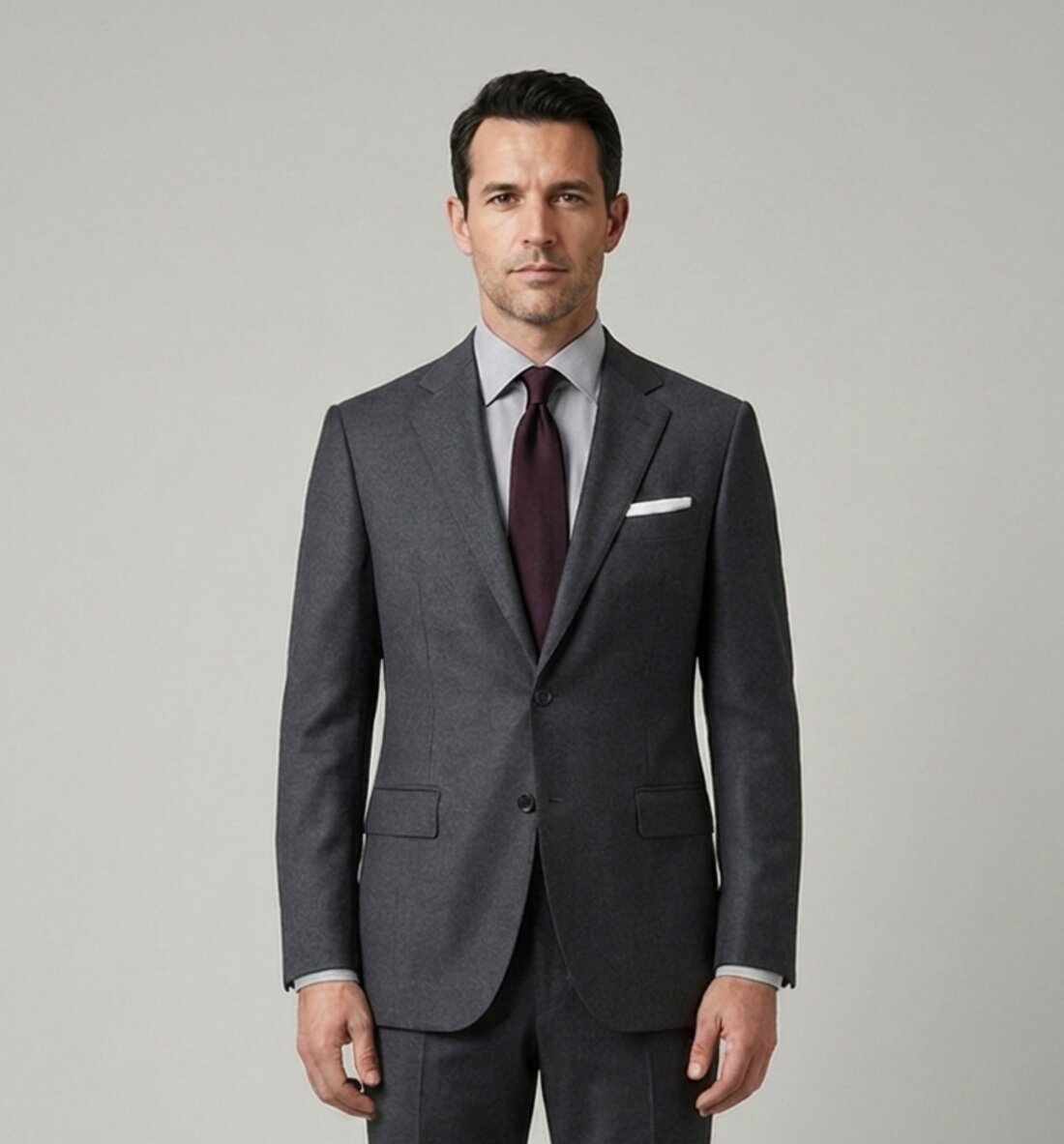
A dress shirt fits when you can slide two fingers inside the buttoned collar, the shoulder seam sits at the edge of your shoulder, the body follows you without pulling at the buttons, and the cuff catches at the base of your thumb when your arm hangs down.
Most men buy a shirt one size too big in the body and one too small in the collar. Here is how to tell.
Start with the collar
Do the top button up. You should be able to slide two fingers flat between the collar and your neck, and no more.
One finger and it will feel like a hand at your throat by mid-afternoon. Three and the collar gapes, which looks careless under a tie and worse without one.
The collar points should sit under the jacket lapels rather than floating on top of them, and the back of the collar should show about half an inch above the jacket collar.
The shoulder seam
The seam joining sleeve to body should land at the outside edge of your shoulder, in the same place a jacket seam should.
Past it and the sleeve head droops, putting a soft fold across the upper arm that shows through a jacket. Short of it and the shirt pulls across the back every time you reach forward. Neither can be altered properly, so treat the shoulder seam as a pass or fail.
The body
With the shirt buttoned, you want roughly two to three inches of room in total around the chest and waist. Enough to pinch a small handful of fabric at your side, not enough to gather a fistful.
Watch the button placket. If the buttons pull and small gaps open between them when you stand normally, the shirt is too tight through the chest. If the fabric billows out over your waistband when tucked, it is too full, and it will make even a good jacket look untidy.
Men who train tend to need more room across the back and shoulders and less at the waist than any off-the-rack shirt provides. That is the same drop problem suits have, and it is why so many athletic builds live in shirts that balloon at the middle.
The sleeves and cuffs
With your arms at your sides, the cuff should end at the base of your thumb, where the wrist meets the hand. That is what lets half an inch show below a jacket sleeve.
The cuff should also be snug enough that it does not slide over your hand when you reach forward. If you have to keep pushing it back, the cuff is too loose regardless of the sleeve length.
Sleeve length is easily altered. Cuff circumference and armhole height are not.
Length
A shirt worn tucked should be long enough to stay tucked when you raise both arms. Anything shorter untucks itself through the day.
If you also wear the shirt untucked, that is a different shirt with a shorter, straighter hem. One shirt rarely does both jobs well.
What made-to-measure changes
Every measurement above becomes its own number rather than a consequence of the collar size you picked. Neck, shoulder, chest, waist, sleeve length and cuff are measured separately, so a broad back does not force a billowing waist.
Dress shirts start at $199, or come as part of a custom fit package with a suit from $1,098. They are built from the same 21 measurements we keep on file, so ordering more later takes a conversation about cloth and collar style and nothing else.
FAQ
How tight should a dress shirt collar be?
Two fingers should slide flat inside the buttoned collar. One finger is too tight to wear all day, three lets the collar gape.
Where should a dress shirt sleeve end?
At the base of the thumb with your arm hanging down, which lets about half an inch of cuff show below a jacket sleeve.
How do I know if my shirt is too big?
It billows over the waistband when tucked, the shoulder seam sits below your shoulder, or you can gather a fistful of fabric at your side.
Can a dress shirt be altered?
The body can be taken in and sleeves shortened. The collar size, shoulder seam and armhole cannot be meaningfully changed, so judge those first.
What does a custom dress shirt cost?
They start at $199, built to your own measurements and kept on file, or come as part of a custom fit package with a suit from $1,098 for the two-piece and shirt together.
Not sure what to buy next? A Wardrobe Plan is forty-five minutes one to one with Derek Burbidge, our founder, working through what you already own, what suits your colouring and your work, and exactly what to add next. You leave with a written plan, and it works wherever you live.
Book Your Wardrobe Plan