How to Press a Suit at Home Without Ruining It
Our recommendation is to have a suit pressed by a professional cleaner, because shine from a home iron is permanent and the canvas in a jacket does not survive heat. If you press at home anyway, use a pressing cloth every time, keep the iron on the wool setting and moving, stay off the lapels, chest and shoulders, and use a steamer for the jacket.
Our recommendation is to send a suit to a professional for pressing. There is too much that can go wrong with an iron at home, and the two things that go wrong most, shine on the cloth and a crushed chest canvas, are permanent. A press from a cleaner costs a few dollars and carries none of that risk.
If you are going to press at home anyway, trousers are the safer job and a jacket is the riskier one. The rule that prevents nearly all damage is simple: never let a hot iron touch wool directly. Use a pressing cloth, every time, without exception.
Why does wool shine?
Pressing wool with direct heat flattens the surface of the fibres. Flattened fibres reflect light differently to the ones around them, and the result is a permanent glossy patch, usually on a lapel, a seat or a knee.
No cleaner can reverse it. The fibre itself has changed. This is why a pressing cloth is not an optional refinement, and why a professional press is our first answer.
What you need
A clean cotton pressing cloth, or a plain cotton tea towel with no pattern or dye that could transfer. An iron set to the wool setting. A padded ironing board. A domestic steamer is a better tool for jackets and is far harder to do damage with.
Trousers
Turn them inside out first if you can. Lay one leg flat with the seams aligned, put the pressing cloth over the fabric, and press in short lifts rather than dragging the iron along.
Work the crease from the top of the leg down, following the existing crease rather than inventing a new one. If the old crease has softened, pin or pinch the fabric so the two seams line up and the crease falls where it always did.
Keep the iron moving, and never rest it in one spot. A few seconds of stillness on wool is enough to shine it.
The jacket, and what to leave alone
Sleeves and the back panel take a light press through a cloth if they need it. The rest of a jacket is best left to a steamer or a hanger, or to the cleaner.
Do not press the lapels flat. A lapel is meant to roll softly from the collar to the button. Ironing a hard crease into it is the fastest way to make a good jacket look cheap, and it is difficult to undo.
Stay off the chest and shoulders. That is where the canvas lives, the internal layer that gives a jacket its shape. Heat and pressure flatten it, and once it is flattened the jacket loses the structure you paid for.
Never press over buttons or the breast pocket, where the layers underneath print a shadow through to the face of the cloth.
The safer alternative for jackets
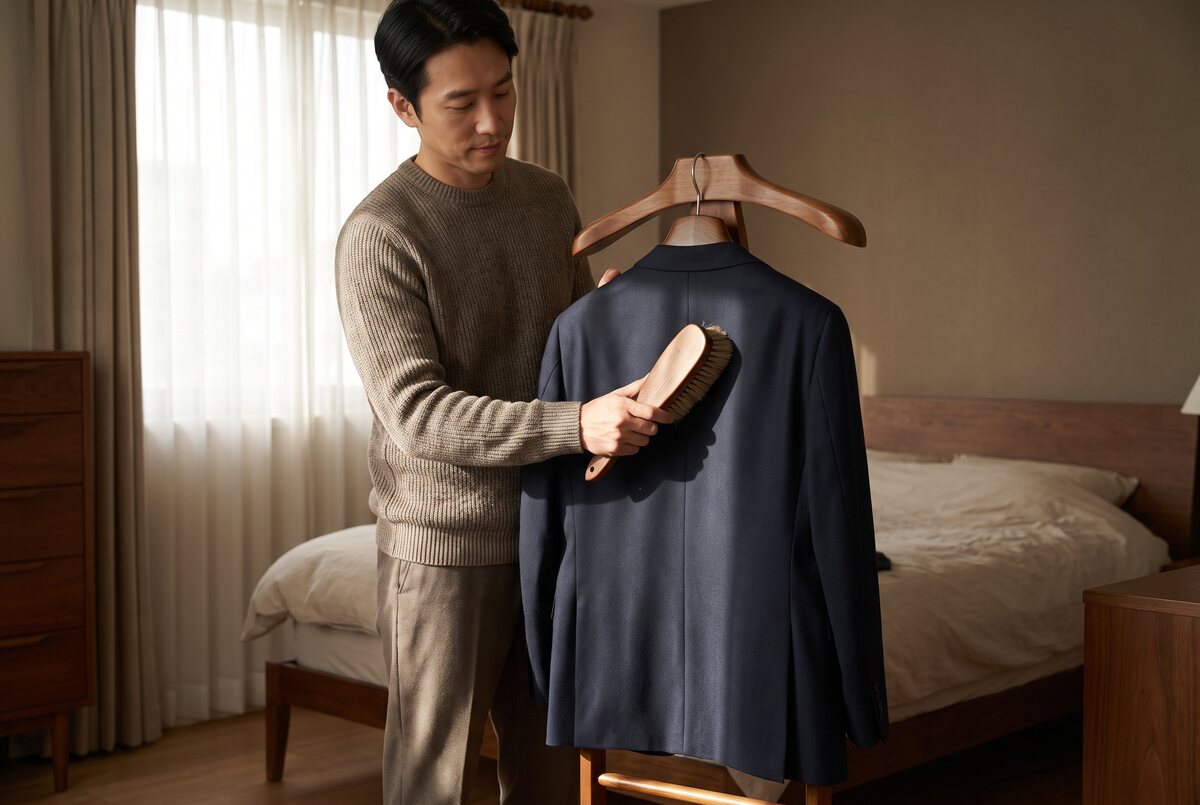
Use a hand steamer held a few inches from the fabric, and let gravity and moisture pull the wrinkles out. You are not touching the cloth at all, which means you cannot shine it, and steam works well on the parts an iron should never go near. Brush it afterwards with a soft garment brush, in the direction of the nap.
Most creasing after a normal day is not a pressing problem at all. A night on a wide wooden hanger with room on either side takes most of it out by morning.
When to leave it to a professional
Whenever you can. If the crease is set from long storage or a suitcase, if the whole suit has gone limp, or if the jacket needs anything more than a steam, a proper press from a cleaner is worth the money and carries none of the risks above.
Ask for a press, not a dry clean. A press without the solvents is gentler on the suit and usually cheaper, and our guide to how often to dry clean a suit explains why the two should not be confused.
FAQ
Should I iron my suit at home?
We recommend a professional press instead. Shine from a home iron and a crushed chest canvas are both permanent, and a press from a cleaner costs little. If you do press at home, keep to the trousers, use a pressing cloth every time, and steam the jacket rather than iron it.
Can you iron a suit jacket?
The sleeves and back, lightly, through a pressing cloth. Not the lapels, chest or shoulders, where the canvas gives the jacket its shape and heat flattens it permanently. A steamer is the safer tool for the whole jacket.
What temperature should you press wool at?
The wool setting on a domestic iron, always through a cotton pressing cloth, moving in short lifts rather than dragging. Never rest the iron in one place.
How do you get shine out of a suit?
You largely cannot. Shine is flattened fibre, not a mark, which is why a pressing cloth matters more than technique and why we suggest leaving pressing to a professional.
Is steaming better than ironing a suit?
For jackets, yes. Steam relaxes wrinkles without touching the cloth, so it cannot shine the surface or crush the canvas.
Not sure what to buy next? A Wardrobe Plan is forty-five minutes one to one with Derek Burbidge, our founder, working through what you already own, what suits your colouring and your work, and exactly what to add next. You leave with a written plan, and it works wherever you live.
Book Your Wardrobe Plan