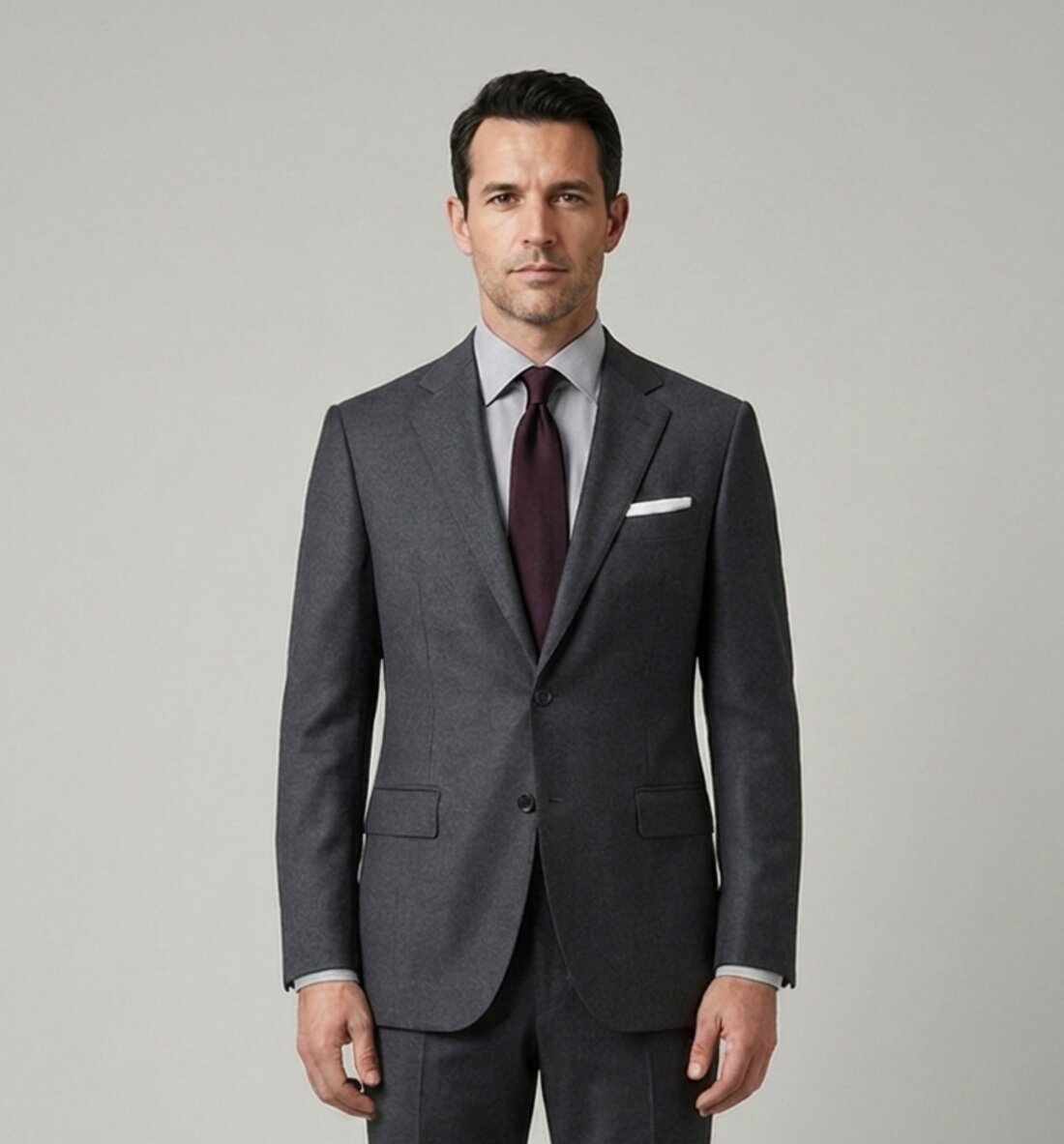
Capsule Wardrobe Step 3: The Seasonals
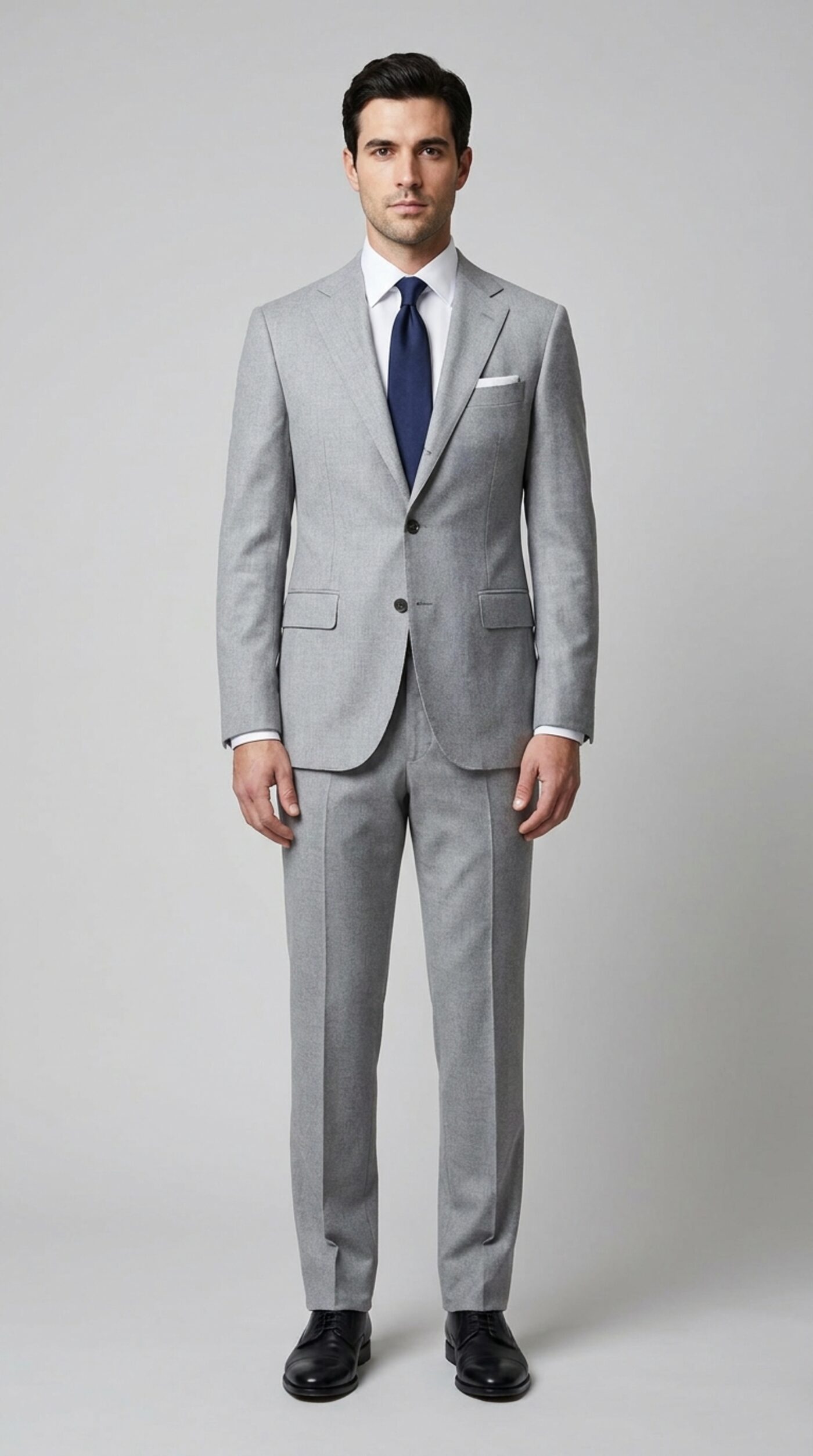
Step 3 of a capsule wardrobe is the seasonal step. It adds two suits and four shirts, so you finish with six suits, the vest from Step 1, and twelve shirts. The suits are a light grey for summer, which can be a linen or a tan if you prefer, and a brown for autumn. It is the step that stops the weather dictating what you wear.
Step 3 of a capsule wardrobe is the seasonal step. It adds two suits and four shirts, so you finish with six suits, the vest from Step 1, and twelve shirts. The suits are a light grey for the warm half of the year and a brown for the cold half, and together they stop the weather deciding what you put on.
The full capsule wardrobe guide lays out all four steps if you want the overview first.
What You Own Going In
From Steps 1 and 2 you have four suits: navy, charcoal, a blue and a mid grey windowpane. You have the navy vest cut from the navy suit cloth, and eight shirts: two white, a white pattern, light blue, light pink, light grey, purple and a grey herringbone.
That is a wardrobe with real range in it. What it does not have is a season. Every one of those four suits is a mid weight in a colour that belongs to no particular month, which is efficient and slightly relentless. An ordinary Tuesday in July feels heavier than it needs to, and October gets no warmth out of any of them.
What You Add, and Why in This Order
First, the light grey
Light grey is the summer suit. It reflects heat instead of holding it, it looks right in strong daylight in a way that navy and charcoal cannot, and it takes the pale shirts you already own better than anything else you own.
If your summers are the problem, this is the suit that fixes them. In the capsule this one is a lightweight wool. We can make it in a tan as well if you want to go further from grey, and any of those three does the job. Linen creases, which is part of how it looks and not a fault, and it is the coolest thing you can wear standing in the sun. How to wear a grey suit covers the grey version, staying cool in your suit covers what else helps in July, and the suit fabric guide goes through the cloths.
Then, the brown
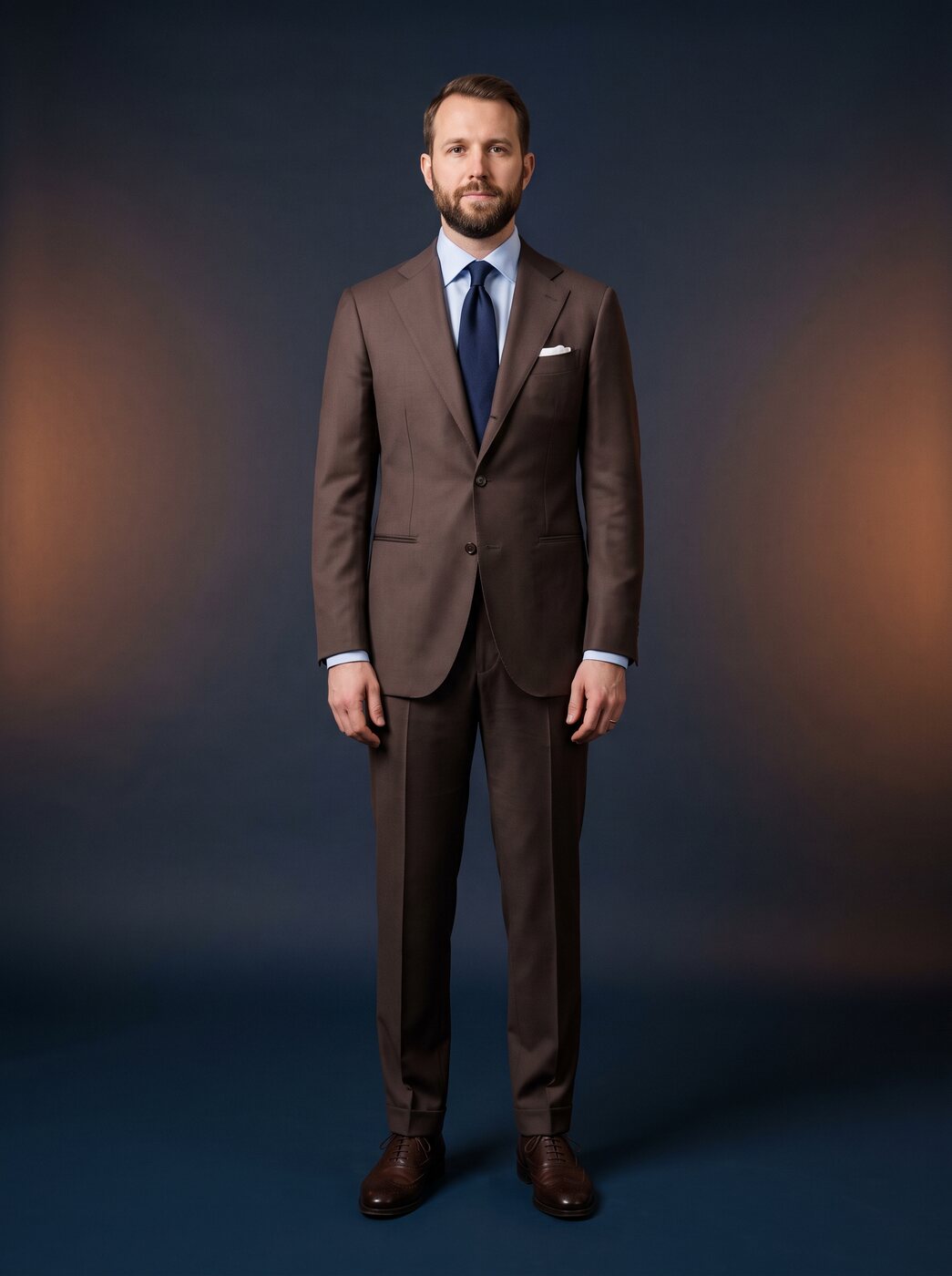
*A note on the cloth: the fabrics and linings in these photographs are examples, not a fixed menu. Every lining is chosen for the man it is made for, so yours will be its own. Our books also change as mills come and go, and they change without notice. If a cloth you have chosen is unavailable when your order is placed, we replace it with one of the same quality or better, as close to the colour as we can get, and we tell you before anything is cut.*
Brown is the suit most men have never owned, and then wear constantly.
It is the colour that makes autumn and winter look deliberate rather than dark. It suits warm colouring especially well, it goes with every shirt in your wardrobe except the very cold greys, and it is the only suit here that looks better with a textured tie than a silk one. Wearing a brown suit goes through the shirts and ties that work with it, and seasonal suit colours has more on which colours carry across the year.
For a suit you will wear every week through a season, a Super 120s wool at $1,299 is the sensible cloth. Super 120 vs Super 150 covers the finer end if you want to know what is above it.
Alongside them, four shirts
The four new shirts take you from eight to twelve. Twelve is enough to wear a suit every weekday, do laundry when you get to it, and never be down to the last clean one.
A third white, because white is the shirt you reach for most. A mid blue, a step deeper than the light blue from Step 1, which holds its own against the light grey suit instead of disappearing into it. A light blue pattern, a fine stripe or a small check, for the days the windowpane stays on its hanger. And a white and black pattern, which is the sharpest shirt in the wardrobe and the one that carries the brown suit at night. Dress shirts start at $199, all in two-ply cotton with a Kent or classic collar.
This Step Is a Starting Point
Light grey and brown are the pair we suggest, because between them they cover the two halves of the year. They are not compulsory. Take the summer suit in a lighter grey or in tan, take a lighter blue instead of the brown. The structure holds as long as what you own covers the year. Put this step before Step 2 if summer is what is biting, or bring us your own two. The structure holds as long as what you add goes with what you own.
Colour and Cloth for Step 3
The palette stays anchored in the colours you wear most. Navy, charcoal, blue and grey are the four you will keep replacing for the rest of your working life, and they are the right place to put the money.
Put the character in texture rather than novelty. A brown with a little weave in it, a linen that behaves like linen, a grey with some life in the cloth. A bold trend on a suit ages badly. The same idea on a shirt or a tie is easy to replace in two years. Our suit price calculator prices an outfit in about ten seconds.
Wearing One Suit's Jacket with Another Suit's Trousers
By six suits this is worth doing on purpose. A brown jacket over grey trousers, a navy jacket over light grey, a blue jacket over charcoal: all of them read as a jacket and trousers to almost everyone who sees it, and none of them costs you anything. The trousers do not have to be made for it.
A real sport coat is the ideal version, and Step 4 has two of them. Until then, use what is already hanging there. Keep the windowpane jacket with its own trousers.
Ties and Pocket Squares, If You Want Them
Still add-ons, still priced separately, still not part of the step. What is worth saying is that this is the step where texture starts to matter more than colour.
Four ties suit the new suits: a deep purple, a maroon in wool, a deep purple in linen, and a blue pattern in cotton. The wool and the linen are the two that make the brown suit and the light grey suit look like they were planned. Two squares, a glen check in wool and a white pattern, do the same job in the breast pocket.
Keep the tie and the pocket square different in colour and in pattern, and keep the pocket square in cotton, wool or linen. No tie means the top button undone and the rest fastened.
How the Pieces Combine
Six suits, one vest, twelve shirts.
| Configuration | Notes | With 12 shirts | |---|---|---| | Navy suit | Any shirt | 12 | | Charcoal suit | Any shirt | 12 | | Blue suit | Any shirt | 12 | | Mid grey windowpane suit | Plain shirts best | 12 | | Light grey suit | Best with the deeper shirts | 12 | | Brown suit | Everything but the cold greys | 12 | | Navy three-piece, suit with its vest | Any shirt | 12 | | A solid jacket over another suit's trousers | Any shirt | 12 |
On paper that is ninety-six. In practice not every shirt looks its best under every suit, so call it seventy or so that look right, which is a third of a working year without repeating an outfit.
When You Are Ready for Step 4
Many men finish here. Six suits, a vest and twelve shirts dress a man in a suit every day, through every season, for years. There is nothing wrong with stopping.
You are ready for Step 4 when black tie turns up on your calendar more than once a year and you are tired of making a dark suit do it, when your weekends want a jacket that was never part of a suit, or when you want the last suit colour, a deep green. Step 4 adds a deep green suit, a tuxedo, two sport coats and three shirts.
Payment plans are available and you set the pace. If you are weighing which suit comes next, a Wardrobe Plan with our Owner and Founder, Derek Burbidge, maps it for you: your palette, what you already own, and the order to add the rest. It is a call, with no measuring. If you order afterwards, measuring happens separately, and each order takes five to six weeks to make. On a multi-piece order we produce one suit and one shirt first, and you confirm the fit on those before the rest is made. Plan the summer suit before summer, not in it.
Frequently Asked Questions
What is the third step of a capsule wardrobe?
Step 3 adds two suits and four shirts. You finish with six suits, the vest from Step 1, and twelve shirts. It is the seasonal step: a light grey for the warm months and a brown for the cold ones.
Should my summer suit be light grey or tan?
Both work, and in the capsule the summer suit is a lightweight wool. A light grey wool is the easiest to wear to an office, and tan is the furthest from what you already own. Pick by where you will actually be standing in July.
Is a brown suit too casual for work?
Not at the deeper end of brown. It reads warm rather than casual, it takes a textured tie better than anything else you own, and it is the suit that stops October looking like every other month.
How many suits does a man who wears a suit every day need?
Four is comfortable and six is generous. Each suit gets several days of rest between wears, which is what makes a suit last. How many suits a man actually needs goes through it by career and lifestyle stage.
Do I have to take Step 3 in this order?
No. The steps are a starting structure, not a rule. If summer is the problem and you have not done Step 2 yet, take the light grey first. We build the list around what you need next.
---
Previous: Step 2: The Core. Next: Step 4: The Full Capsule. Back to the full capsule wardrobe guide.
Not sure what to buy next? A Wardrobe Plan is forty-five minutes one to one with Derek Burbidge, our founder, working through what you already own, what suits your colouring and your work, and exactly what to add next. You leave with a written plan, and it works wherever you live.
Book Your Wardrobe Plan