Why Suits Never Fit Off the Rack, And What to Do About It
Why Suits Never Fit Off the Rack, And What to Do About It
If you've spent years buying suits that look fine on the hanger and wrong on your body, it's not your fault. And it's not your body.
It's the way off-the-rack suits are made.
This is something I explain to almost every new client who walks into Cardero for the first time. By the time most men find us, they've already tried the department stores, the national chains, and the tailoring route. They've been told to size up, take it in, or make do. And they're still not happy with how they look in a suit.
There's a reason for that. Understanding it is the first step toward fixing it.
Off-the-rack suits are built for a body that doesn't exist
When a clothing manufacturer creates a suit in size 42R, they're not making it for you. They're making it for the statistical average of what a man with a 42-inch chest is assumed to look like.
That average doesn't account for the fact that your shoulders might be broader relative to your chest. It doesn't account for thighs that are more muscular than the trouser block assumes. It doesn't account for longer arms, a shorter torso, or a narrower waist relative to your chest measurement.
The suit is built for a proportion. If your proportions match it, you're lucky. Most men's don't.
This is why a man can buy a 42R in five different brands and have it fit differently in all five, and still not quite right in any of them. The size is consistent. The pattern beneath it is not.
A tailor can fix sleeve length and trouser hem. A tailor cannot fix the shoulders. That's structural.
What alteration can fix, and what it can't
A good tailor is valuable. But there are limits to what tailoring can correct on a suit that wasn't cut for your body.
What can be altered: sleeve length, trouser hem, waist shaping, side seams. These are surface adjustments that most experienced tailors handle well.
What cannot be altered, or cannot be corrected without rebuilding the jacket: the shoulders, the chest width, the seat of the trousers. These are structural. The shoulder seam sits where it sits because the pattern was cut that way. Moving it requires deconstructing and reconstructing the jacket, which costs more than the suit is worth and often still isn't perfect.
This is why men spend $400 on a suit, $150 on alterations, and still walk away with something that feels off. The foundation was wrong.
What 21 measurements actually changes
When a client comes into Cardero, we take 21 measurements before anything is built.
Not because it sounds impressive. Because that's what it takes to create a pattern that's actually yours.
We measure your chest, your natural waist, your seat, your shoulders, your sleeve length, your trouser length, your thigh, your cuff, your leg opening, and more. Each measurement feeds into a pattern that's created specifically for you, not adjusted from a standard block, but built from your numbers.
The result is a garment where the shoulders sit exactly where your shoulders end. Where the chest closes without pulling. Where the trousers fit through the seat and thigh because we measured those specifically, not assumed them from your waist size.
For men with athletic or muscular builds, bigger chests, broader shoulders, thicker thighs, this is often the first time a suit has ever actually worked. Off-the-rack simply doesn't account for those proportions. Made-to-measure does because it starts with yours.
Why fit matters more than anything else
I've watched men spend $3,000 on a suit that looks average because it doesn't fit. I've watched men spend $899 on a custom suit that turns heads in a boardroom because every line is right.
The price is not the variable. The fit is.
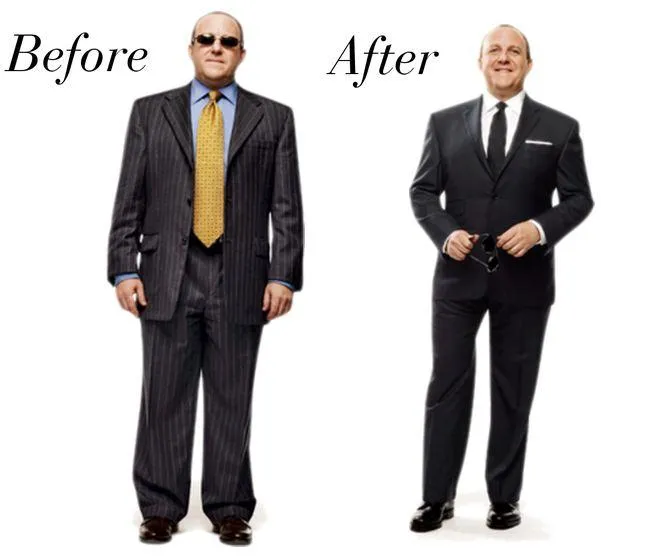
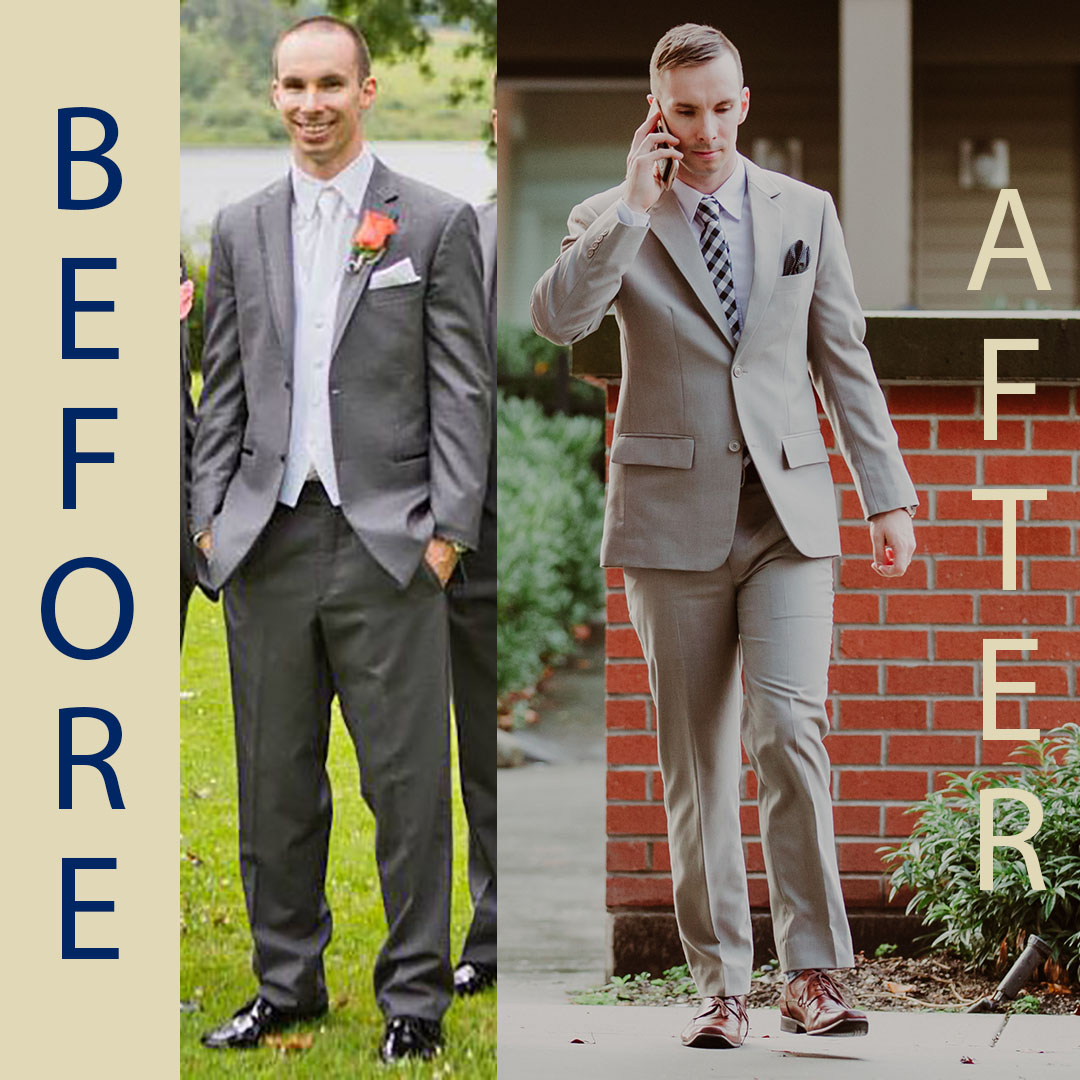
A well-fitted suit makes you look leaner, taller, and more put together. None of that is about the fabric or the brand. It's geometry. When the seams are where they're supposed to be and the garment moves with your body, the effect is immediate and obvious.
This is what most men are chasing when they keep buying suits that almost work. They're chasing fit, and they're trying to find it in a product that wasn't designed to provide it.
How we approach the fitting at Cardero
Every appointment starts with a conversation before any measurements are taken. We want to understand what you're building, what your wardrobe currently looks like, and what occasions you're dressing for.
Then we take the 21 measurements and your file is created. Your pattern is stored permanently, every future order starts from that file, not from scratch. Reordering takes about 20 minutes and ships in five weeks.
If anything needs adjusting when the garment arrives, we cover the cost of alterations and update your file. That's standard practice. Most first orders need minor hemming or tapering. We handle it.
The appointment is free and there's no obligation to order anything. If you want to come in and understand the process before committing to anything, that's a completely normal way to start.
Find out what 21 measurements can do for how your clothes fit. Free appointment at Cardero Clothing.