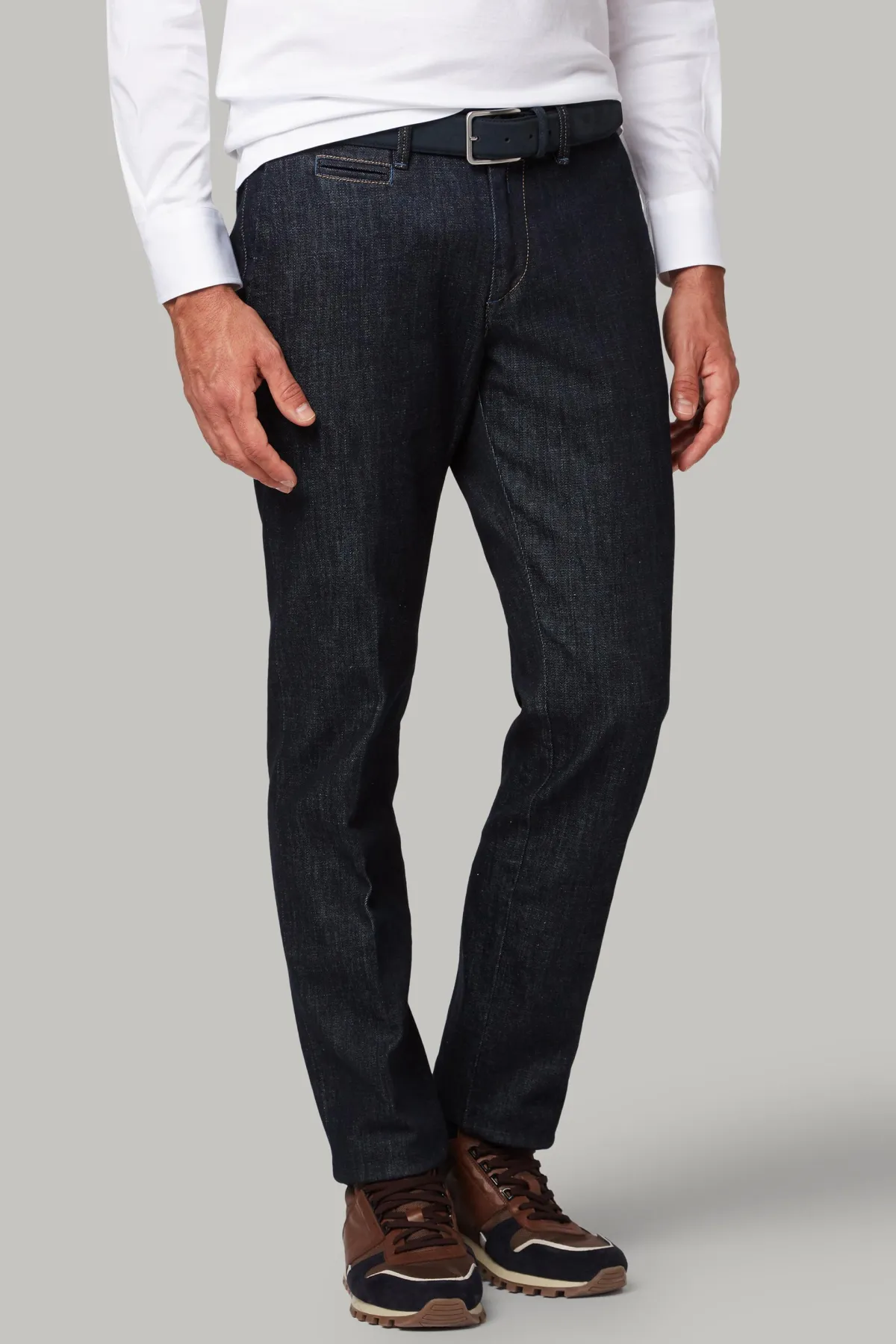
Trouser Fit Guide for Men: Why the Break, Seat, and Rise Matter More Than the Waist Size
When a pair of trousers does not fit, most men blame the waist size. The waist is the one measurement they know. It is the measurement on the label. It is the first thing they check.
In most cases, the waist is not the problem. Here is what actually determines whether trousers fit.
Why Waist Size Is the Least Useful Number
A waist measurement tells you one thing: the circumference at the narrowest point of your torso. It tells you nothing about how the fabric will sit across your seat, how it will fit through your thighs, where the rise will land, or how the trouser leg will fall from hip to floor.
A man who is a 34-inch waist with a muscular seat and developed thighs cannot buy trousers that fit from the waist size alone. Any trouser that fits the thigh and seat will have excess fabric at the waist. Any trouser that fits the waist will not close over the thigh.
The same problem exists in reverse for a man with a narrower seat relative to his waist. The trouser that fits the waist sits loosely across the seat and billows in the back.
Waist size is the entry point for finding a trouser to try on. It is not a reliable predictor of fit.
The Seat
The seat measurement is the circumference of the widest point of the hips and buttocks. It determines how the trouser sits across the back half of the body.
If the seat measurement is larger than the trouser allows, the back of the trouser pulls, the seat rises, and the thighs are restricted. The back seam under tension. If the seat measurement is smaller than the trouser, the back of the trouser bags and bunches.
The seat is one of the 21 measurements taken at a Cardero appointment. It is captured independently of the waist and hips. The trouser pattern is built to both measurements rather than to one.
The Thigh
The thigh circumference is the measurement most often responsible for trouser failure in men who train.
Off-the-rack trousers are cut with a thigh width that corresponds proportionally to the waist size. For men with legs that are developed relative to their waist, this proportion fails. The trouser that fits the waist has no room through the thigh. The thigh seams are under tension, the trouser creases disappear, and the leg has no clean fall.
There is no alteration that adds fabric to a thigh that is already cut too narrow. Taking in a waist does not help a tight thigh. The trouser is structurally wrong for the body.
A custom trouser is cut to your thigh circumference independently. The leg is built with the room your body requires.
The Rise
The rise is the distance from the crotch seam to the waistband. It determines where the trouser sits on the body.
A low-rise trouser sits below the natural waist. It works with certain silhouettes and builds but reads as more casual than a standard or higher rise.
A standard rise trouser sits at or just below the natural waist. This is the correct position for a suit trouser and provides the most flattering and functional fit for most men.
A high rise sits at or above the natural waist. This is associated with formal and vintage-inspired tailoring. For men with a longer torso, a higher rise creates better proportions.
Off-the-rack suit trousers come in one rise configuration. If that rise does not suit your torso length, the trouser either shows a gap between the jacket hem and trouser waistband, or the jacket hem sits too low.
At Cardero, rise is captured as one of the 21 measurements. The trouser is built to your torso and your preferences.
The Break
The break is the amount of trouser fabric that rests on top of the shoe. It is the most visible fit element of the trousers.
No break: the trouser hem falls exactly at the top of the shoe, with no fabric resting on it. A clean, sharp look. Associated with slim or contemporary trouser silhouettes.
A slight break: one small fold of fabric resting at the front of the shoe. The most versatile and classic break. Works across most shoe styles and formality levels.
A full break: a significant fold of fabric resting on the shoe. Traditional and formal. Associated with classic suiting.
The break is determined by the trouser hem length, which is one of the 21 measurements at a Cardero appointment. It is cut to produce the specific break you specify.
Custom Trousers vs Altered Off-the-Rack
A trouser alteration can take in the waist and adjust the hem. It cannot change the thigh width, the seat, or the rise without rebuilding significant portions of the garment.
A custom trouser is built to every dimension simultaneously. The fit is right from the first wearing because it was designed for your body from the start.
Book a free appointment at book.carderoclothing.com.